











Scientific Evidence
Pyure Technology® has a proven track record of safe and effective air purification, backed by over 15 years of real-world use. It is supported by the most extensive safety and efficacy data in the industry, demonstrating consistent performance in improving indoor air quality and controlling pathogens.
Scientific and Efficacy Data
Destruction of Airborne Pathogens
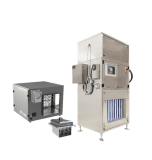
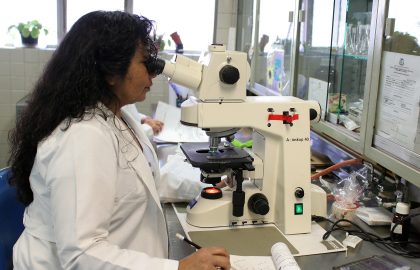
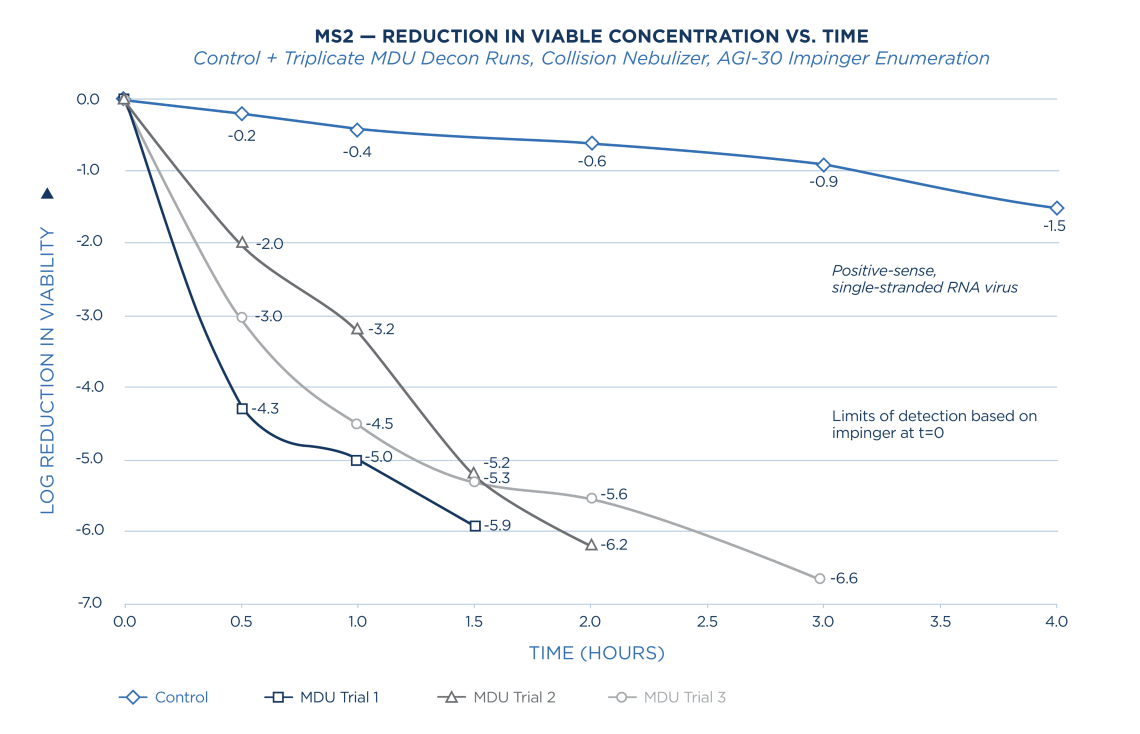
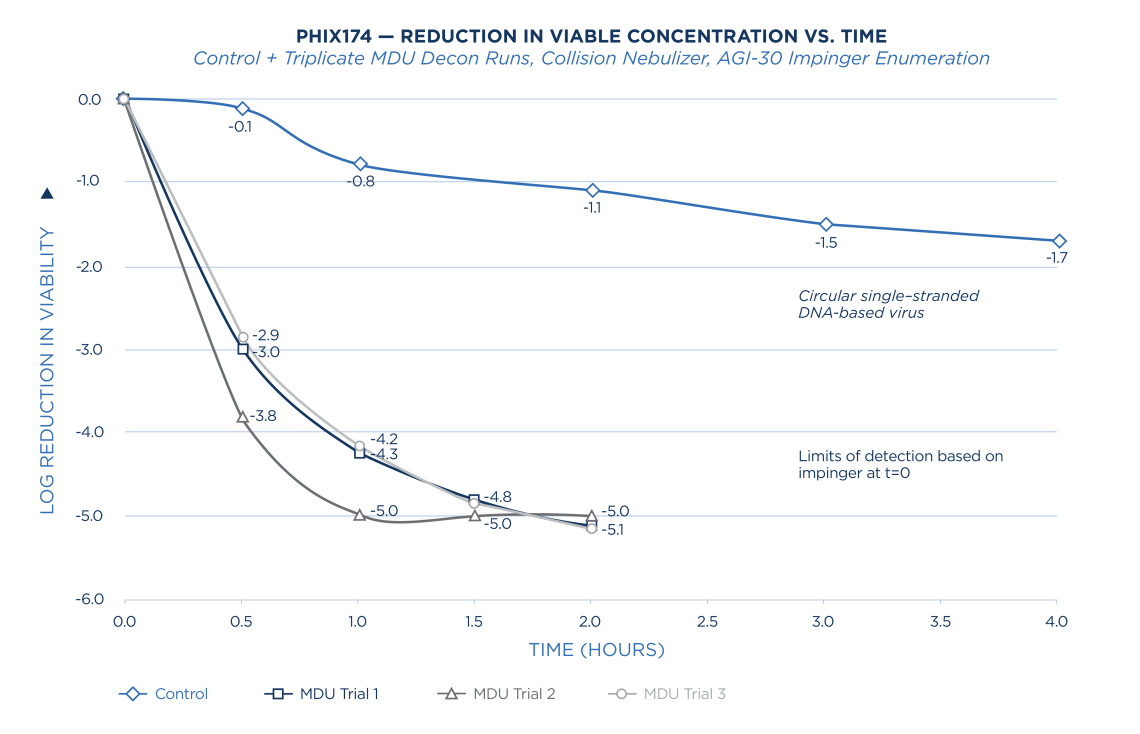
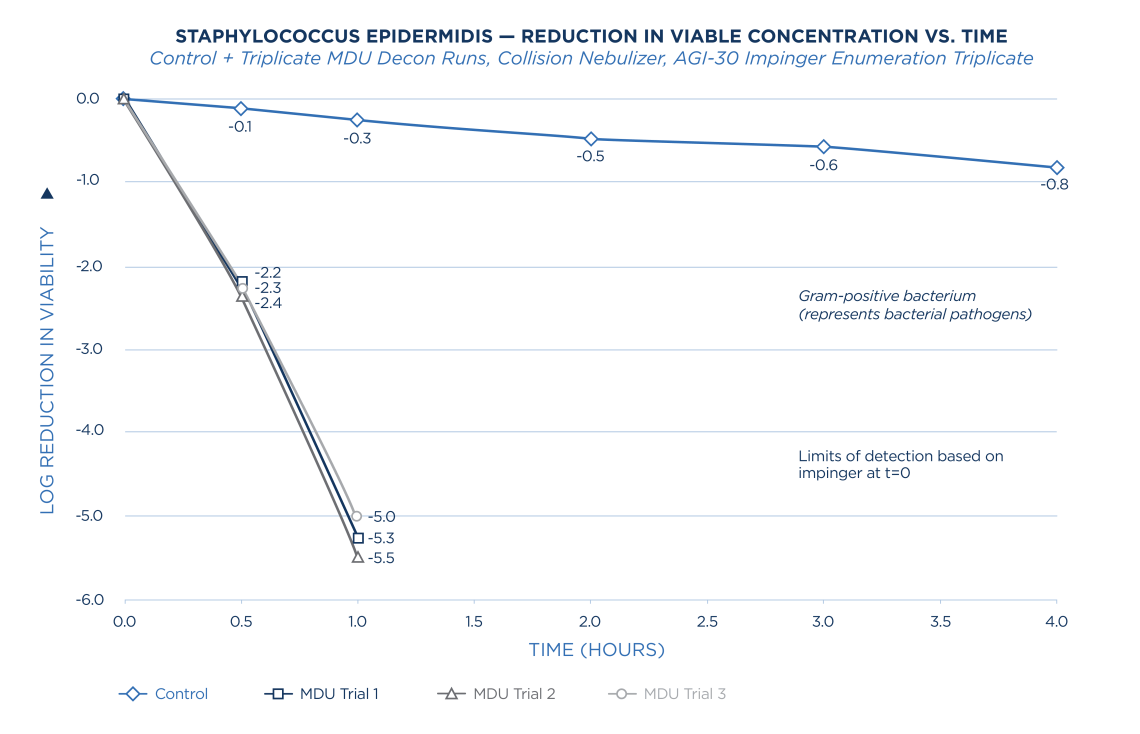
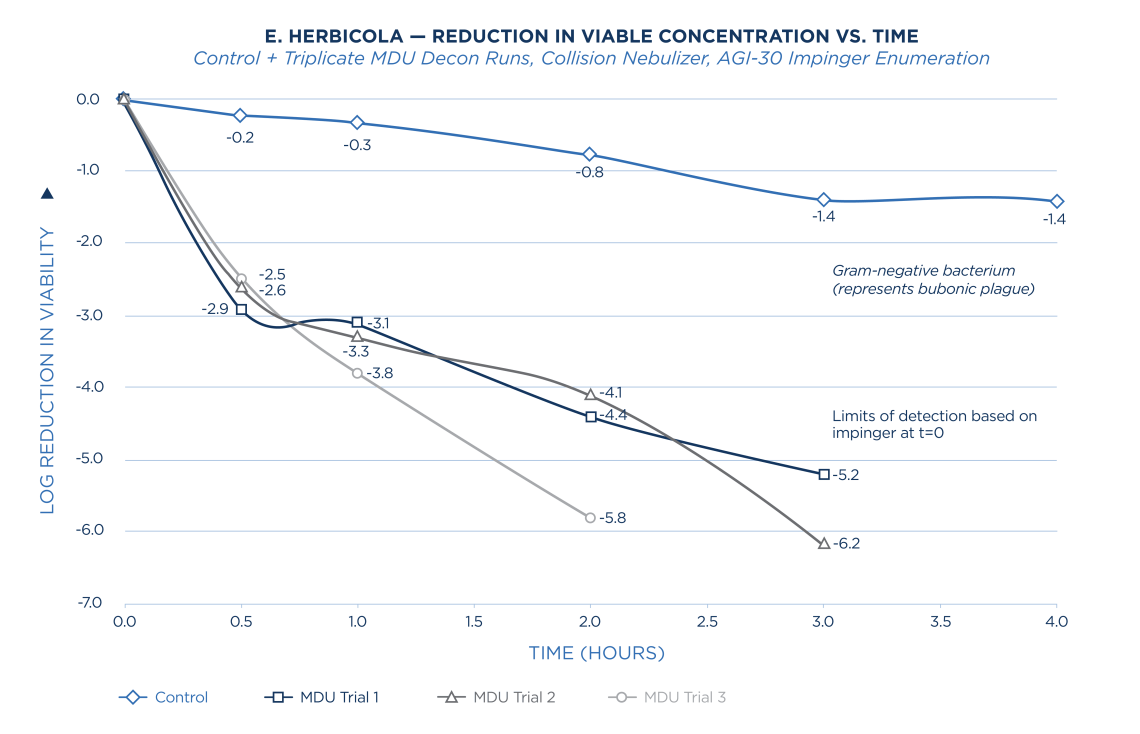
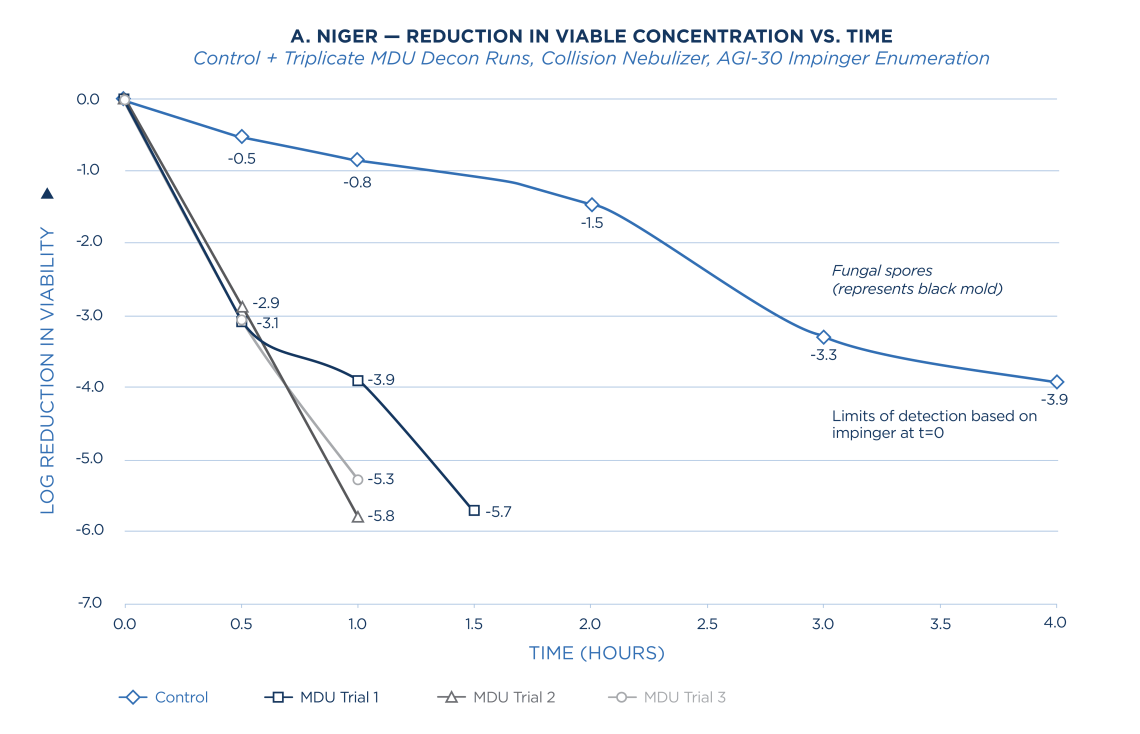
At the Aerosol Research & Engineering Laboratories (ARE Labs), a U.S.-based facility focused on studying aerosolized microorganisms, Pyure carried out an evaluation of pathogen elimination rates, including viruses, bacteria, and mold. The Odorox® MDU/Rx™ device achieved a reduction rate ranging from 99.9% to 99.99% within one hour.
Two viruses were selected to assess performance against both RNA- and DNA-based viruses:
- MS2 bacteriophage is a positive-sense, single-stranded RNA virus that infects the bacterium Escherichia coli. It is commonly used as a surrogate for pathogenic RNA viruses such as SARS.
- Phi-X174 bacteriophage is a circular, single-stranded DNA virus that also infects Escherichia coli. It is routinely used as a surrogate for DNA viruses such as smallpox.
Two vegetative bacteria were selected as representatives of a broad range of pathogenic bacteria:
- Staphylococcus epidermidis is a Gram-positive bacterium used as a surrogate for medically significant pathogens such as Staphylococcus aureus (“staph” infections).
- Erwinia herbicola, now known as Pantoea agglomerans, is a Gram-negative bacterium commonly used as a surrogate for Francisella tularensis and Yersinia pestis (the causative agent of bubonic plague).
One species of black mold was also selected:
- Aspergillus niger was chosen due to its resilience and association with respiratory issues, particularly in infants, the elderly, and immunocompromised individuals. It is notably difficult to eliminate both in the air and on surfaces.
Pathogens eliminated at the source
Pyure’s efficacy was tested against five biosecurity level one (BSL-1) microorganisms, chosen as representatives of a broader spectrum of more pathogenic organisms:
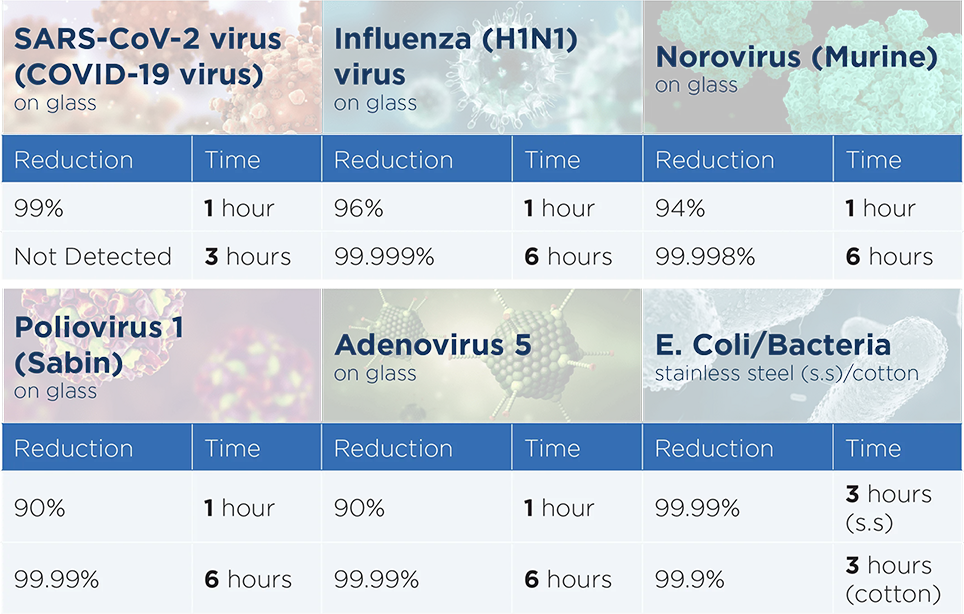
Pathogen Elimination on Surfaces
Safety and Toxicity
Mechanism of Action
A study conducted at the Lovelace Respiratory Research Institute (LRRI) in an ultra-clean environmental chamber demonstrated the following:
- Hydroxyl production levels of an Odorox® Boss™ unit are comparable to the hydroxyl concentrations naturally produced by sunlight outdoors.
- Hydroxyls react with volatile organic compounds (VOCs) within 20–40 milliseconds, generating powerful organic oxidants that are stable enough to circulate throughout the treatment space and sanitize both air and surfaces.
- The reaction rate of hydroxyls with VOCs is approximately one million times faster than that of ozone.
- A minimal amount of ozone is produced as a byproduct of hydroxyl generation; however, the concentrations remain well within safe limits for occupied spaces.
These findings were subsequently published in a peer-reviewed scientific journal:
David R. Crosley, Connie J. Araps, Melanie Doyle-Eisele, & Jacob D. McDonald (2017). Gas-phase photolytic production of hydroxyl radicals in an ultraviolet purifier for air and surfaces. Journal of the Air & Waste Management Association, 67(2), 231–240. DOI: 10.1080/10962247.2016.1229236

